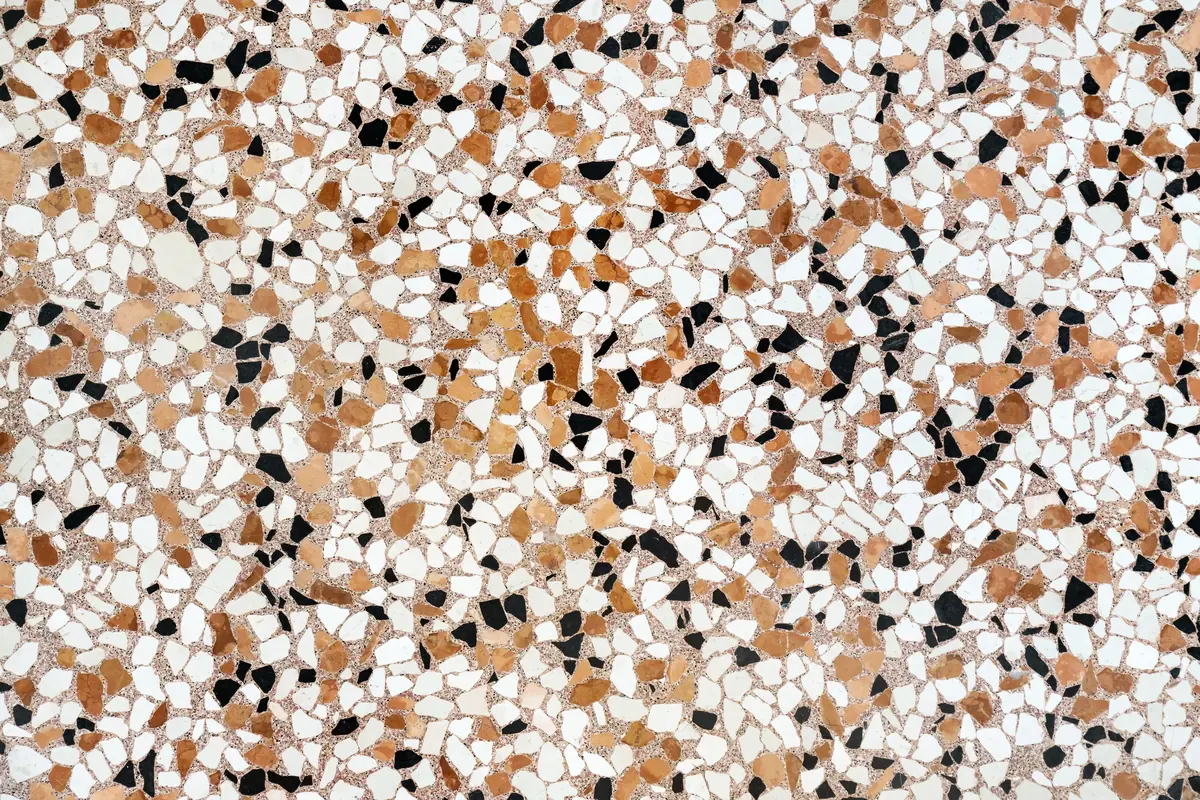
If you've stood in a nicely finished garage and noticed that the floor looks like speckled granite and feels slightly textured underfoot, you've seen a decorative flake system. It's also called a chip floor, a fleck floor or a broadcast floor. Whatever the name, the concept is the same: decorative vinyl chips are thrown into a wet coating, then sealed under a clear layer.
Flake is popular because it solves practical problems. It hides the dust and minor imperfections that would show on a solid color, it adds traction, it can be patched invisibly, and it looks finished in almost any setting. This page explains how flake systems are built, how to choose a blend and where they make the most sense.
What makes flake so practical
Camouflage. The random multicolor pattern hides dust, light tire marks, small chips and the outlines of repaired cracks.
Texture. The edges of the chips under the topcoat give a subtle grip that a smooth gloss floor doesn't have.
Repairability. A gouge can be ground out, rebroadcast with matching chips and resealed. On a random pattern, the patch blends in.
Thickness. A full broadcast system builds a substantial layer between your tires or shoes and the concrete.
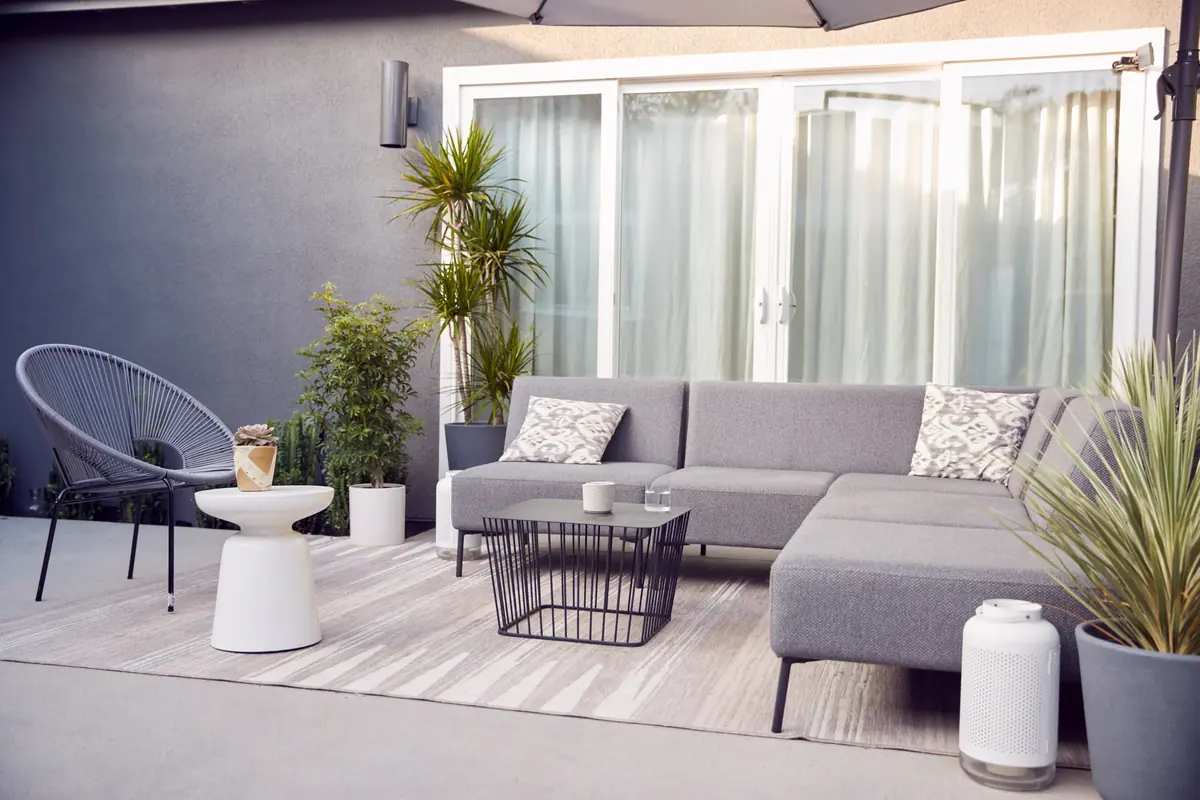
Versatility. The same system works in garages, laundry rooms, restrooms, kennels, covered patios and commercial back rooms.
How the system is built
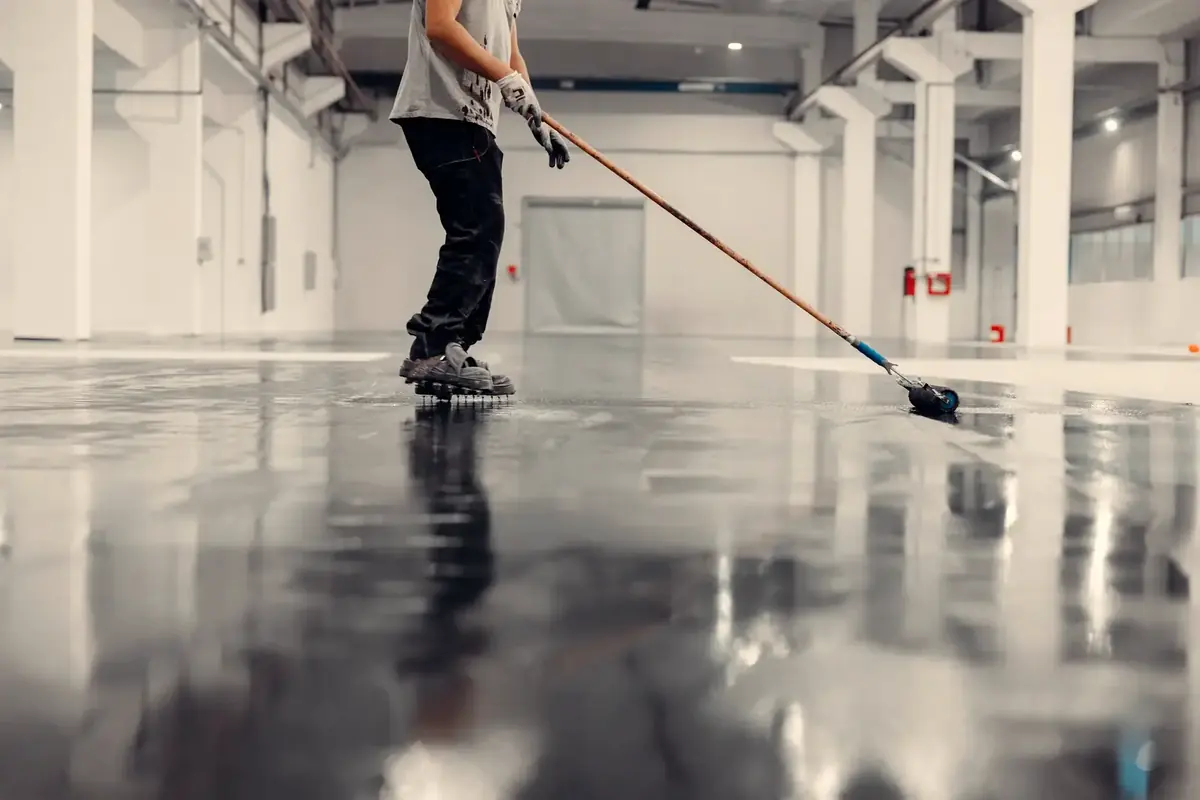
The base coat
A pigmented base, epoxy or polyurea depending on the system, is applied over a diamond-ground and repaired slab. It's tinted to the dominant color in the blend.
The broadcast
While the base is wet, chips are thrown by hand in high arcs so they fall evenly. In a full broadcast, installers keep going until the base can't hold any more chips. In a partial broadcast, they stop at a chosen density.
Scraping and cleanup
After the base cures, a long-handled scraper knocks down chips standing on edge, and the loose excess is vacuumed away. This step controls how sharp or smooth the floor will feel.
The clear coat
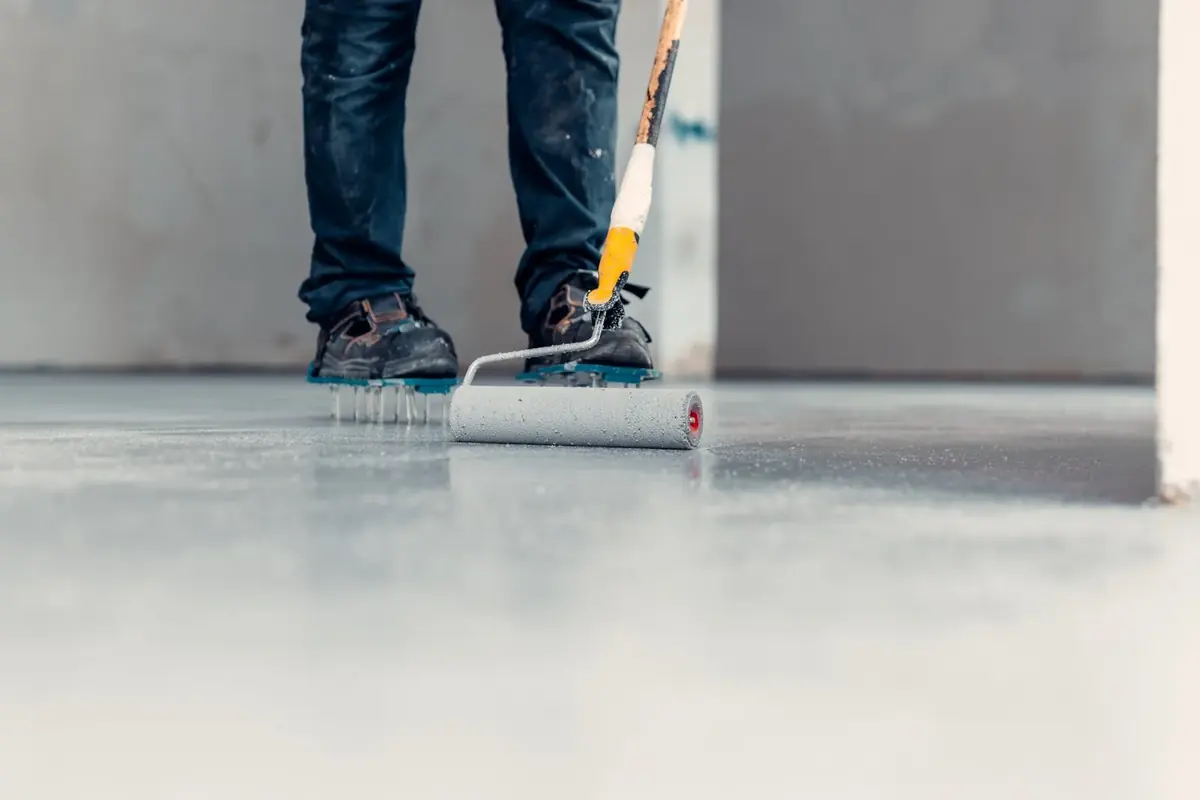
A clear topcoat, usually polyaspartic, fills in around the chips and seals the system. One heavy coat leaves light texture; a second coat makes the surface smoother.
Choosing a blend
By color family
- Cool grays and granites suit contemporary homes and dark cabinetry, and hide dust well.
- Earth tones with tan, brown, terracotta and cream complement Southwestern and Spanish-style architecture.
- Light and white-based blends brighten dim garages and give a crisp, modern look.
- High-contrast black-and-white blends feel bold in gyms and shops.
By chip size
Quarter-inch chips give the classic speckled look. Eighth-inch chips create a finer, more uniform texture that suits commercial spaces and interiors. Mixed sizes add depth.
By density
| Broadcast | Look | Hides dust and wear | Texture |
|---|---|---|---|
| Full | Base color fully covered | Very well | Most |
| Heavy partial | Some base color peeks through | Well | Moderate |
| Light partial | Solid color with a scatter of chips | Somewhat | Least |
Where flake systems perform best
- Residential garages, the most common use by far.
- RV and toy garages, where a large slab needs durability more than drama.
- Laundry rooms, mudrooms and pet areas, where water and dirt are routine.
- Home and commercial gyms, for texture and impact tolerance.
- Covered patios and carports, with a UV-stable topcoat.
- Restrooms and locker rooms, where cleanability and traction matter.
- Veterinary clinics, groomers and kennels, with frequent wet cleaning.
- Retail stockrooms and break rooms, for durability at a reasonable cost.
Our flake installation sequence
- Samples and planning. We look at blends on site and confirm chip size, density and texture.
- Grinding. The slab is profiled with diamond tooling and vacuum extraction.
- Repairs. Cracks, spalls and joints are filled and leveled.
- Base and broadcast. The base goes down in sections, and chips are thrown immediately behind it.
- Scrape and vacuum. The surface is knocked down and cleaned.
- Topcoat. One or two clear coats are applied, with optional anti-slip media.
- Cure and handover. Written times for walking, moving items back and driving.
What separates a professional flake floor
The flake packets included in DIY kits are meant to be sprinkled lightly over a thin coating. A professional full-broadcast system uses many times more chips over a thicker base, sealed under a substantial clear coat. The difference is obvious when you walk on it and even more obvious a few years later.
Experience also matters in timing. Throw chips too late and they won't embed; scrape too early and they'll pull out. A crew that does flake floors every week knows how the base behaves on a cool morning versus a hot afternoon.
Phoenix notes for flake floors
Sun on the clear coat
The vinyl chips themselves are color-stable, but the clear coat around them needs to resist UV. Anywhere sunlight reaches the floor, we use an aliphatic polyaspartic topcoat so the clear layer stays clear.
Heat and broadcast timing
On a warm slab, base coats skin over faster, which shortens the window for throwing chips. Our crews size sections to the conditions so chips always land in wet material.
Dust-friendly by design
Flake is arguably the best finish for a desert garage. It hides the fine dust that blows in every time the door opens and the grit tracked in on tires.
Flake in commercial and shared spaces
Flake isn't only a garage finish. Property managers use it in restroom cores, break rooms, stockrooms and maintenance shops because it stands up to mopping, carts and spills without showing every scuff. Smaller chips in a neutral blend look professional rather than garage-like, and a textured topcoat helps where floors are cleaned wet. For tenants who need a space back quickly, a fast-cure topcoat can return the room to service the next day. We'll recommend chip size and density based on how visible the space is to customers.
Care for flake floors
- Sweep or blow out grit regularly.
- For deeper cleaning, a soft brush and diluted neutral cleaner lift grime out of the chip texture.
- Avoid harsh acids and solvent cleaners.
- Keep a small bag of your blend for future touch-ups.
- Consider a maintenance clear coat after years of heavy use.
Common flake floor mistakes we're asked to fix
Too few chips. A thin sprinkle over a thin coating looks sparse and offers little protection. The base color shows everywhere, and so does every scuff.
No scraping step. Chips left standing on edge make a sharp, uneven surface that's hard to clean and uncomfortable to kneel on.
A topcoat that yellows. Some older flake floors were sealed with standard epoxy, which turns amber near the garage door after a few years of afternoon sun. A UV-stable clear avoids this.
Coating over sealer. If the original construction sealer was never ground off, the whole system can lift in sheets. Correcting it means removing everything and starting over, which is why we grind every slab.
Choosing in the wrong light. A blend picked under bright store lighting can look very different under a single garage bulb. That's why we bring samples to the site.
Flake for rentals, HOAs and multi-unit properties
Property owners and HOAs often choose flake for rentals, community fitness rooms, clubhouse restrooms and maintenance buildings. The finish tolerates wear from many different users, hides everyday soiling between cleanings and can be spot-repaired between tenants. Neutral blends keep units consistent across a property, and documenting the blend name makes future repairs simple.
How long a flake project takes
A standard two-car garage flake floor with a fast-cure system is often completed in one working day. Larger garages, laundry rooms combined with garages, heavy repairs or slow-cure epoxy systems can stretch the work to two or three days. Commercial flake floors are scheduled in sections when the space has to stay partly open. In every case we tell you up front how long the area will be out of use and when vehicles, carts or furniture can return.
Flake on stairs, steps and vertical edges
Garage steps, stem walls and the edges of patios can be coated in the same flake system as the floor. On vertical surfaces, chips are pressed or broadcast into a thicker base so they adhere, then sealed. The result ties the room together and protects edges that would otherwise chip. It's detail work, so mention it during the walkthrough if you'd like those surfaces included in the quote.
Decorative flake systems
Can I make a custom blend?
Yes. Beyond standard blends, many custom combinations are available. Custom orders can add lead time, which we build into the schedule.
How rough is the texture?
With one topcoat, there's a light texture you can feel with your hand. Two topcoats make it smoother. We can show you both on sample boards.
Does flake work indoors?
Absolutely, especially in laundry rooms, mudrooms, gyms and casitas. Smaller chips and partial broadcasts look refined in living spaces.
Will the colors fade?
Quality vinyl chips are color-stable. The clear coat is the part that can yellow in sun, which is why we use UV-stable topcoats wherever sunlight reaches.
How do you repair a damaged area?
We grind out the damaged spot, apply base, broadcast matching chips and recoat. Because the pattern is random, a patch blends in far better than on a solid color.