Ask ten Phoenix homeowners why they want a coated garage floor and you will hear some version of the same list. The concrete looks tired. Oil stains from a previous owner never came out. There is a constant film of dust, and some of it is coming from the floor itself. And the garage is where the day starts and ends, so it might as well look good.
A garage floor coating fixes all of that, but only if it stays on the slab. That is the part people rarely see in photos. This guide explains what a full-service garage coating includes, how the system is put together, which finishes make sense for which garages, and what Phoenix heat and sun mean for the materials we choose.
Who this service is for
Garage coatings suit almost any residential garage, but they make the biggest difference for a few groups of people:
- New homeowners who want the garage finished before boxes, shelving and cars move in. An empty garage is the easiest and fastest one to coat.
- Long-time owners dealing with old oil stains, flaking paint or a failing DIY kit. These floors need more preparation, but they show the biggest before-and-after difference.
- People using the garage as more than parking, such as a home gym, workshop, hobby space or golf cart and toy storage.
- Sellers who want the garage to present as cleanly as the rest of the house.
- Owners of detached garages, RV garages and casitas with garage space, where a durable floor protects a large investment.
Inside the system, layer by layer
A professionally installed garage floor isn't one product. It's a stack of layers, and each one depends on the one beneath it.
Layer 0: the prepared slab
Before any coating, the concrete is diamond ground. Grinding removes the cream layer on top of the slab, the sealer or curing compound applied when the house was built, and whatever has soaked in since. It leaves a profile roughly like medium sandpaper, which gives the base coat something to grip. We grind with dust extraction and finish the edges by hand along walls and around steps.
Layer 1: repairs
Cracks are cleaned out and filled. Pitted areas, popped aggregate and broken edges around the garage door are rebuilt with a fast-setting repair compound, then ground level with the rest of the floor. If the slab has control joints, we fill or keep them based on your preference and how active they look.
Layer 2: the base coat
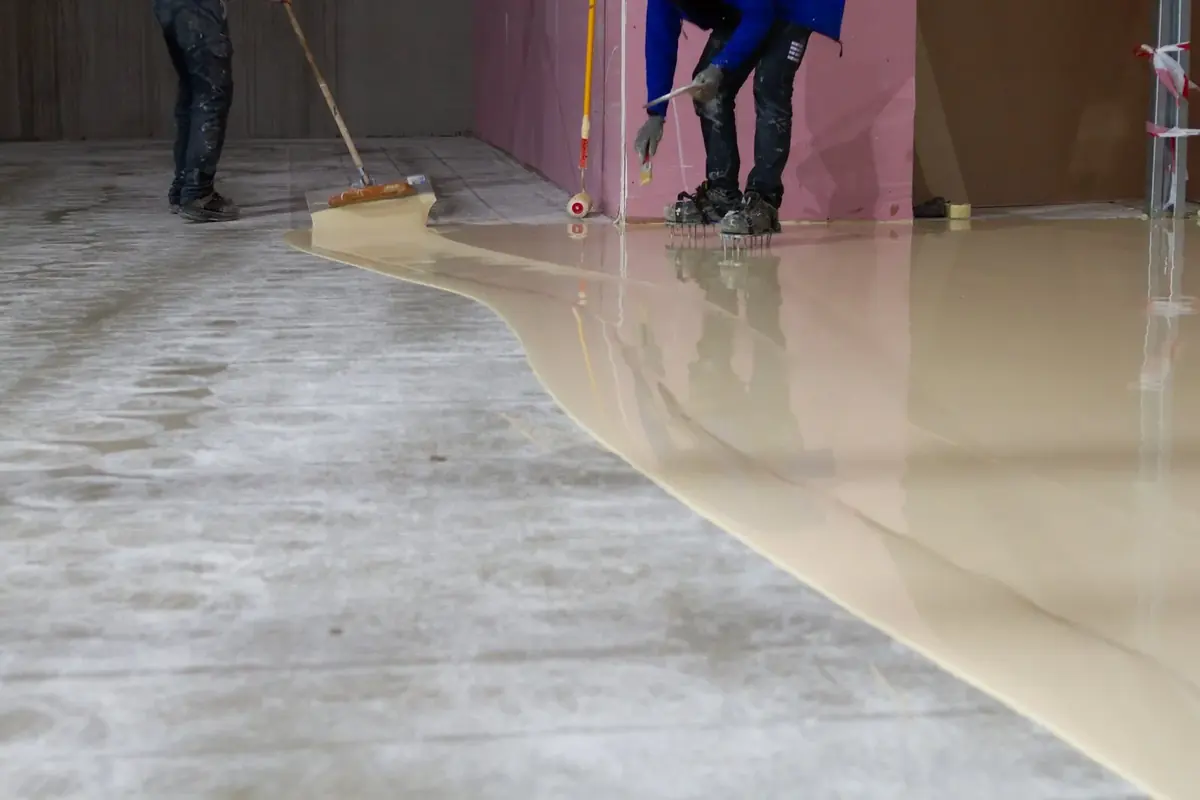
This is the anchor. A pigmented epoxy or polyurea base is spread across the floor and back-rolled to an even film. It soaks into the opened concrete and creates the bond that every other layer relies on. Its color is matched to the decorative layer so tiny gaps in a flake broadcast don't stand out.
Layer 3: the decorative layer
On most garages this is a full broadcast of vinyl flake thrown into the wet base until no base color shows. On others it is a second color coat, a metallic layer or a light partial broadcast.
Layer 4: the clear topcoat
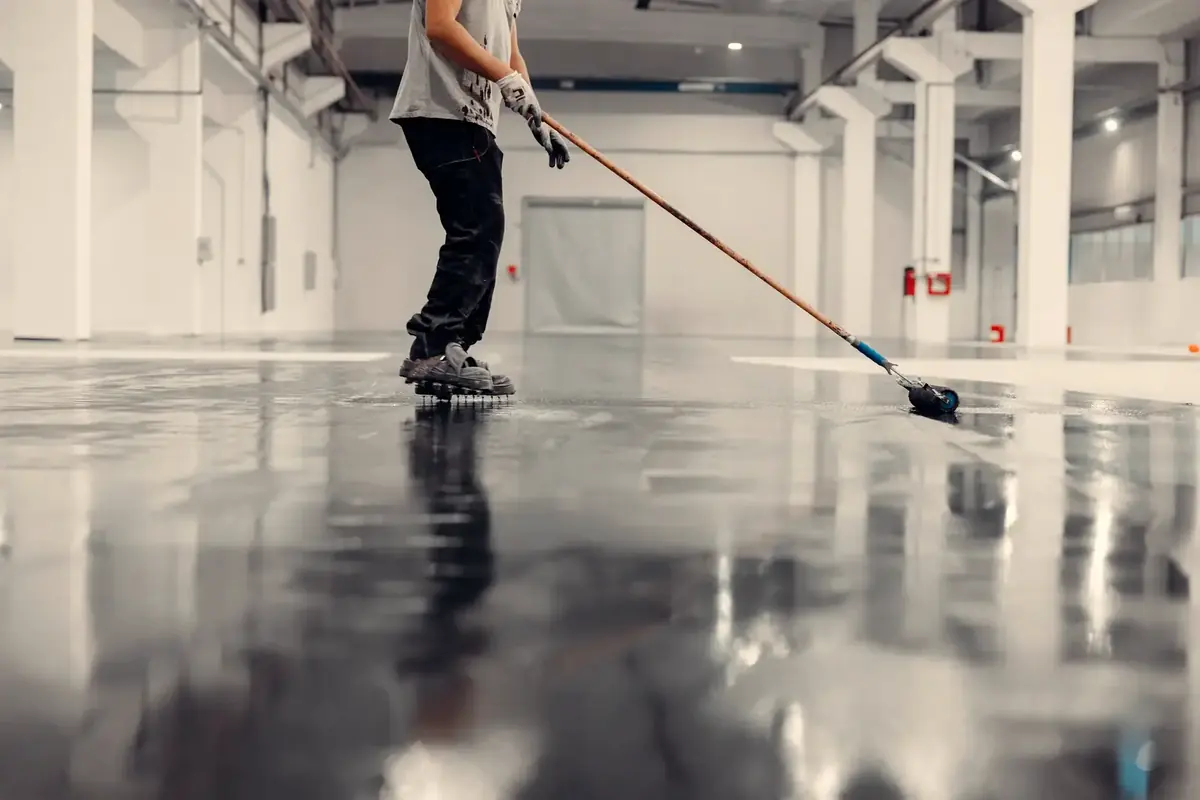
Once the base cures, excess flake is scraped and vacuumed, and a clear topcoat is applied. In our garages this is almost always polyaspartic, because it resists UV yellowing and holds up well to abrasion. The topcoat determines sheen, how smooth or textured the surface feels and how well the floor resists wear.
Choosing a finish
| Finish | What it looks like | How it lives day to day |
|---|---|---|
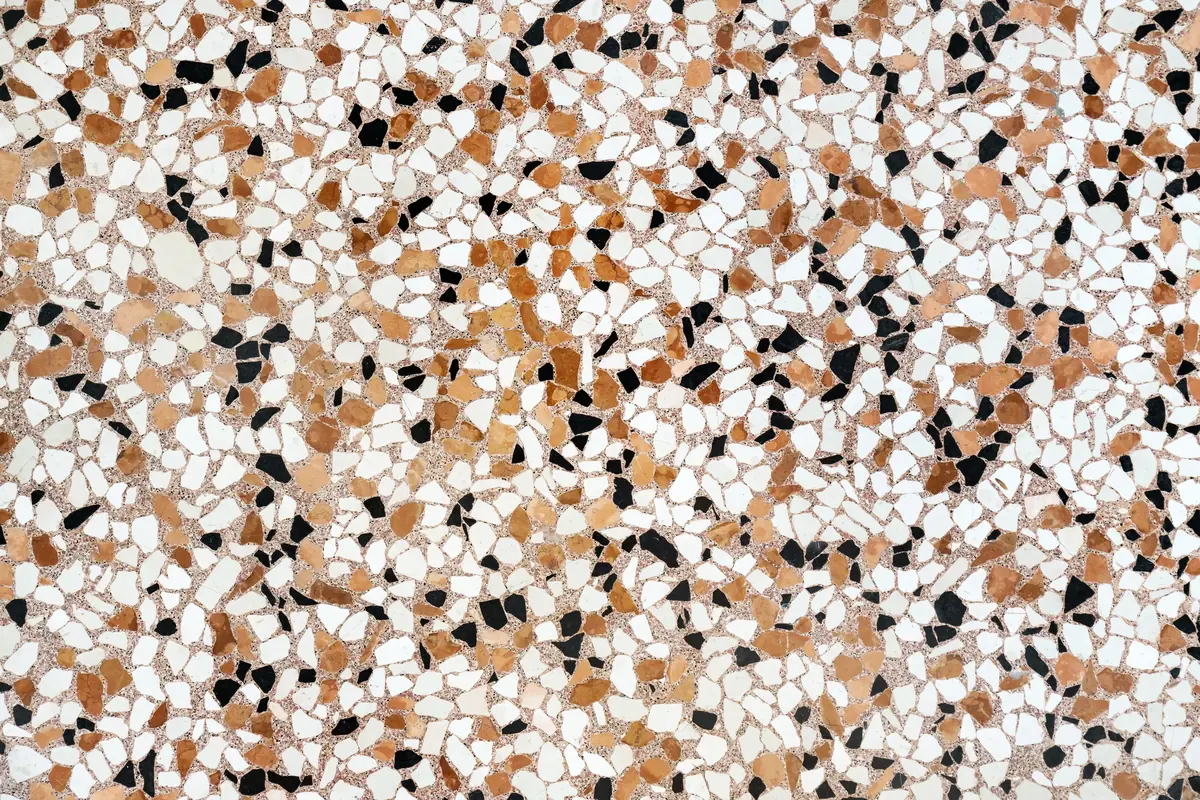
| Full flake | Speckled, stone-like, fully covered | Best at hiding dust, scuffs and repairs; light texture |
| Partial flake | Solid color with a scatter of chips | Clean, modern; shows more dust than full flake |
| Solid color | Uniform gray, tan or white | Crisp workshop look; shows tire marks and dust |
| Metallic | Flowing, reflective, marble-like | Showpiece; best for gently used or display garages |
Most clients choose full flake. If you love a solid or metallic look, we'll talk honestly about what it takes to keep it looking that way in a garage that opens to desert wind every day. You can explore blends on our decorative flake systems page.
Our installation sequence
- Walkthrough. We measure, test moisture, identify oil saturation and previous coatings, and look at crack patterns. You'll see flake samples in your own garage lighting.
- Written quote. Every layer, the prep method, and the times for foot traffic and parking are listed.
- Clear-out. The garage needs to be empty. Wall-mounted cabinets can stay; anything on the floor should come out.
- Grind and repair. Usually the longest part of the day.
- Base and broadcast. Applied in sections, with flake thrown immediately behind the base coat.
- Scrape, vacuum, topcoat. The surface is cleaned and sealed.
- Handover. You get written instructions on when to walk, when to move items back and when to park.
With a fast-curing system, many garages are done in one long day. Larger garages, heavy repairs or epoxy-only systems take longer.
What a professional crew does differently
Garage kits from big-box stores are popular, and most of the garages we strip were coated with one. The common failures are predictable: an acid etch that didn't remove the original sealer, a thin water-based coating with little build, and a car parked on it too soon. The result is peeling under the tires within a year or two.
A professional garage service differs in practical ways:
- Diamond grinding instead of etching, which reliably removes sealers and opens the surface.
- Commercial-grade, high-solids materials that build real film thickness.
- Enough flake to fully cover the base, rather than a sprinkle.
- Repairs done first, so cracks and pits don't show through.
- Crew coordination that matches the fast set times of modern base and topcoats.
- A written cure schedule, because parking too early is one of the most common causes of failure.
Phoenix conditions that shape a garage floor
Heat in the slab
Garage slabs absorb heat all day in summer and give it back at night. Coatings applied to a hot slab set much faster, which shortens the time the crew has to spread, broadcast and roll. We schedule early starts from late spring through early fall and check surface temperature before every batch.
Tires off hot pavement
Tires pick up heat from summer roads. When a hot tire sits on a coating that isn't fully bonded or cured, it can soften and grab the surface, then pull it up as it cools. The protection is mechanical: proper grinding, a base coat that penetrates, a hard topcoat and full cure time before parking.
Afternoon sun through the door
Many Phoenix garages face west. When the door is open late in the day, sunlight hits the front third of the floor. An aromatic epoxy surface would gradually yellow there. A polyaspartic topcoat keeps it clear.
Dust and desert grit
Fine dust settles on fresh coatings and rides in on tires. During installation we keep the door down. Once the floor is in service, a flake finish hides everyday dust better than any smooth color.
Older slabs and oil
Homes from earlier decades often have garage slabs saturated with oil. Oil in the pores interferes with bonding, so these areas get extra grinding and degreasing, sometimes with a specialized primer.
Keeping the floor looking new
- Blow or sweep out grit regularly, especially in monsoon season.
- When it needs a real wash, use a bucket of warm water with a mild cleaner and scrub the flake texture with a soft-bristle deck brush.
- Wipe up brake fluid, battery acid and paint stripper promptly.
- Use pads under kickstands, jack stands and heavy shelving feet.
- Don't drag steel objects across the floor.
- Consider a maintenance topcoat after many years if traffic lanes look dull.
Getting your garage ready for install day
A little preparation on your side makes the day go faster and protects your belongings:
- Clear the floor completely, including bikes, bins, shelving units and the second refrigerator.
- Move vehicles out the night before and park them where they can stay until the cure time has passed.
- Unplug or relocate anything plugged into low outlets near the floor.
- Tell us about floor drains, water heaters and water softener loops, so we can protect and coat around them correctly.
- Plan for noise and dust in the morning. Grinding is loud; with vacuum extraction it's far less dusty than most people expect.
- Arrange a power source. Our grinders need access to electrical service; we'll confirm details during the walkthrough.
Garage floor coating questions
Can the whole job really be done in one day?
Many standard two-car garages can be completed in one working day with a polyurea or polyaspartic system. Heavy oil remediation, extensive repairs or a full epoxy system can extend it to two or three days.
How soon can I park?
That depends on the topcoat, the temperature and the manufacturer's guidance. We put the exact parking time in writing. Waiting the full period is one of the best things you can do for the floor.
Do I have to empty the garage completely?
Everything on the floor needs to come out. Wall cabinets and items hung on walls can usually stay, and we'll protect them.
Will the coating cover the garage step and stem wall?
It can. Coating the step and the lower few inches of the stem wall gives a finished look and protects those surfaces. Ask for it in your quote.
My garage has an old epoxy kit that's peeling. Can you fix it?
Yes. We grind the old coating off and start fresh. Coating over a failing layer would tie the new floor to the old failure.
Is flake slippery?
Flake has a natural texture. If you wash cars in the garage or want extra grip, we can add a fine anti-slip media to the topcoat.