Polyurea has become a headline word in floor coating ads, often paired with claims that it's dramatically stronger than epoxy. The reality is more useful than the hype. Polyurea is a family of fast-reacting coatings. Some are spray-applied industrial linings for truck beds and tanks; others are formulated to be rolled and squeegeed onto floors. In residential and light commercial flooring, "polyurea" almost always means a hand-applied base coat, used under a UV-stable polyaspartic topcoat.
Knowing that makes it much easier to evaluate quotes. You're buying a system, and what matters is how the slab is prepared, how the base bonds and how the topcoat protects it.
What polyurea brings to a floor system
Speed. Polyurea base coats set quickly, so flake can be broadcast and the topcoat applied the same day.
Flexibility. Many polyurea bases have more elongation than rigid epoxies, letting them move slightly with the slab instead of cracking or letting go. That helps on slabs that swing from cool nights to hot afternoons.
Bond. On properly ground concrete, polyurea primers wet the surface and grip well.
Cold-weather tolerance. It keeps reacting on chilly January slabs where many epoxies crawl, so winter jobs stay on schedule.
Impact tolerance. The same flexibility that handles thermal movement also helps absorb the shock of dropped tools.
Where polyurea isn't the first choice
- Damp slabs. Quick-reacting chemistry doesn't like vapor rising through the slab. If our meter readings come back high, the first coat becomes a vapor-tolerant epoxy instead.
- Very thick industrial floors. High-build epoxy or urethane cement often makes more sense for heavy forklift areas.
- Sun-exposed surfaces without protection. Many polyurea base coats are aromatic and will discolor in UV unless covered by an aliphatic topcoat.
- Very large open floors with a small crew. Fast set times demand a well-staffed team.
The terminology, sorted
| Word you'll hear | What it usually means in flooring | Sun exposure |
|---|---|---|
| Polyurea | A fast-setting base coat or primer | Needs a UV-stable topcoat |
| Polyaspartic | An aliphatic polyurea used mainly as a topcoat | UV stable |
| Epoxy | A primer, base or body coat with long working time | Yellows in UV |
| "One-day floor" | Usually polyurea base + polyaspartic top | Depends on the topcoat |
The typical polyurea system
- Diamond-ground and repaired slab. Non-negotiable.
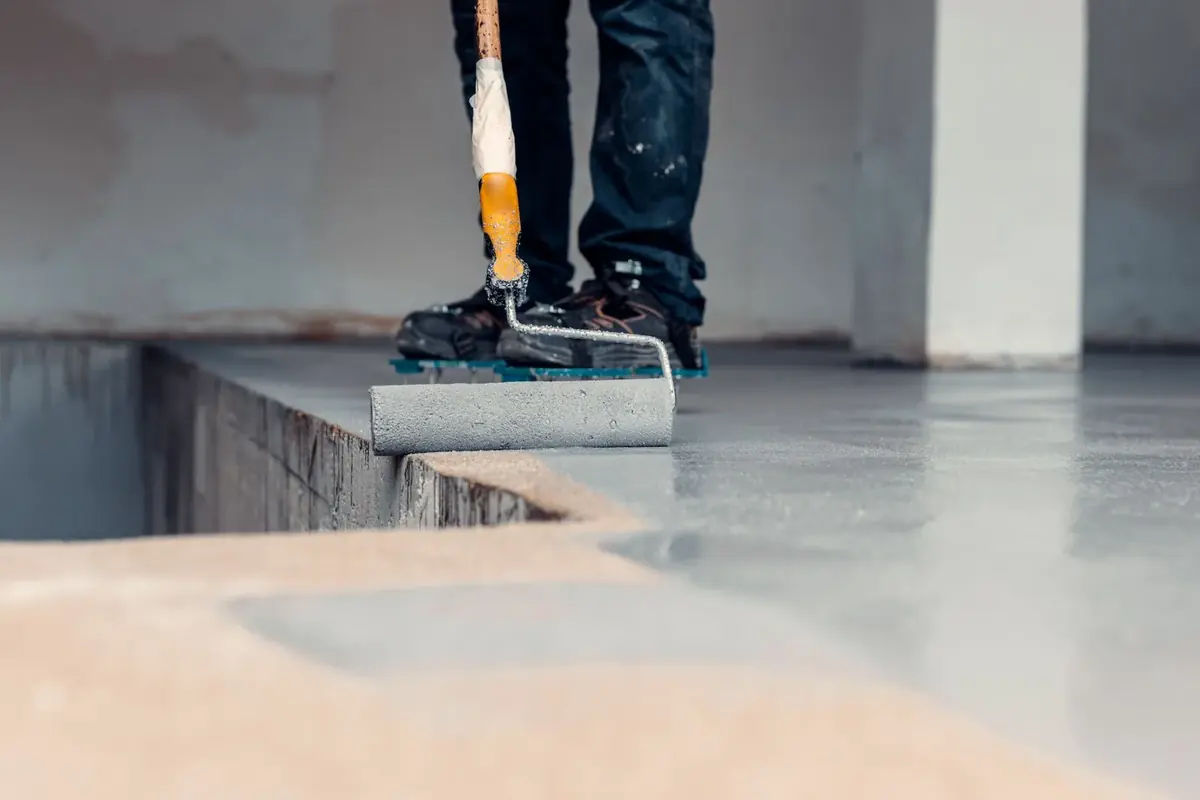
- Pigmented polyurea base coat. Spread and back-rolled in sections.
- Flake broadcast or second color. Applied immediately behind the base.
- Scrape and vacuum. Once the base has set.
- Polyaspartic topcoat. One or two coats, with optional grit.
Variations include a hybrid system with an epoxy primer for moisture or penetration, followed by polyurea and polyaspartic layers. We decide that after testing the slab.
Good applications
- Attached and detached residential garages.
- RV garages and toy barns.
- Home workshops and hobby spaces.
- Car detailing studios and small service bays.
- Home gyms.
- Covered patios and carports, under a UV-stable topcoat.
Questions worth asking any installer
- Which layer is polyurea? Base, topcoat or both? This tells you what's protecting against UV.
- How is the slab prepared? Look for diamond grinding, not acid etching.
- How much flake and topcoat? Full broadcast versus partial, one clear coat versus two.
- What if the slab has moisture? There should be a test and a plan.
- When can I walk, load items back and park? Each should be stated.
Our installation approach
Test and prepare
We test moisture, identify oil and old coatings, and diamond grind. Polyurea depends on a clean, open surface, so we're thorough with edges and contaminated areas.
Repair
Cracks and spalls are filled with fast-setting material that cures quickly enough to keep the schedule moving.
Apply in rhythm
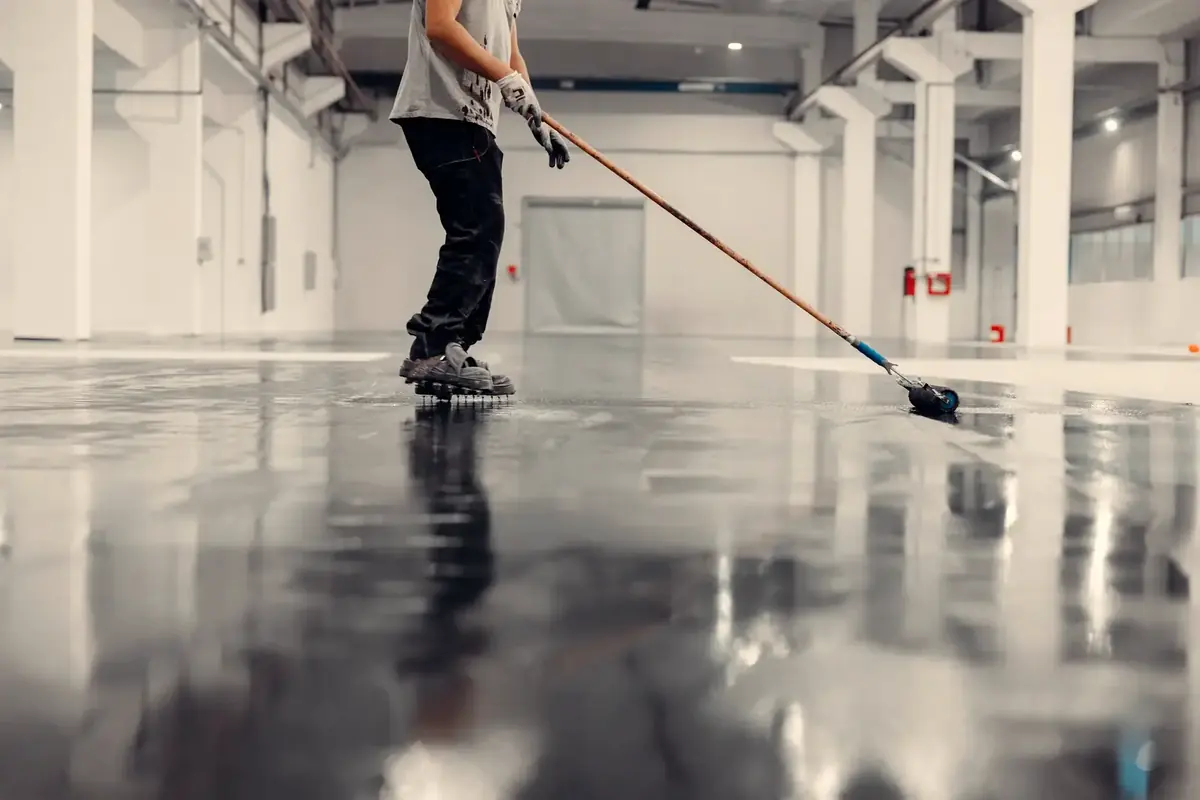
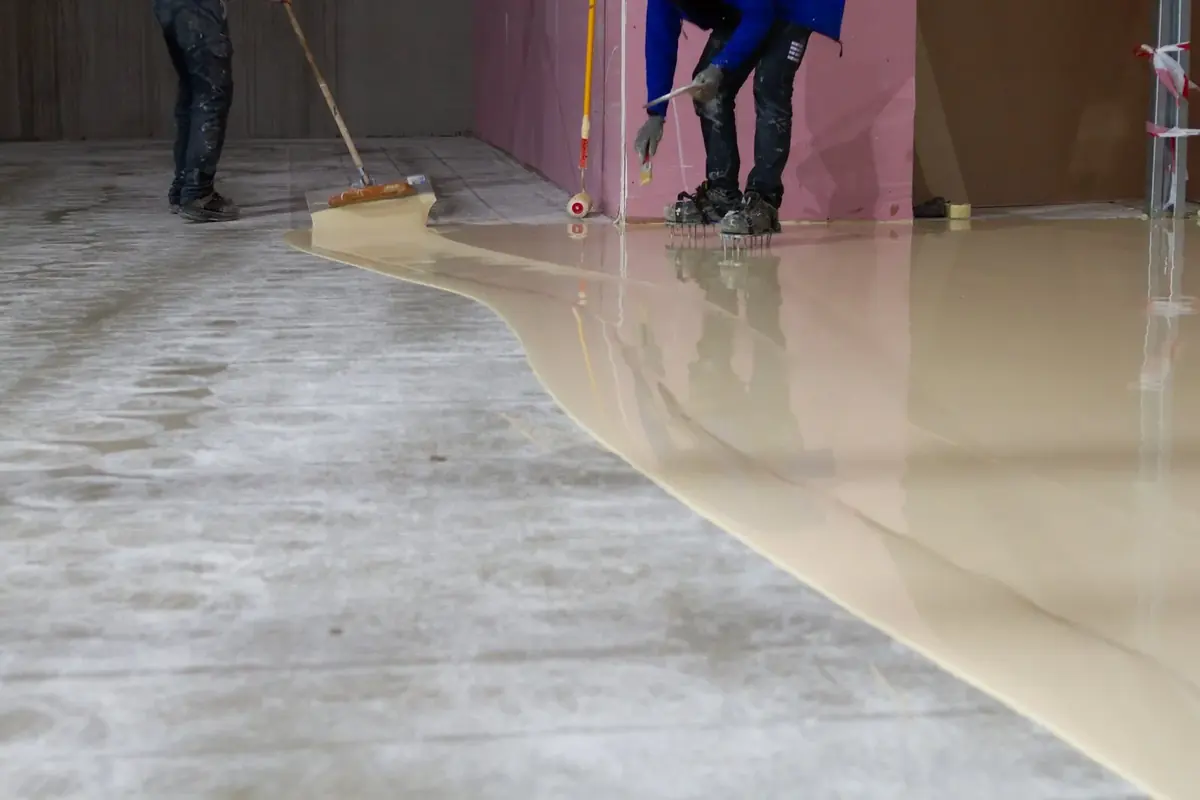
Polyurea base coats are mixed in small batches. One installer spreads, another back-rolls and a third broadcasts flake right behind. Timing is everything.
Seal and cure
After scraping, the polyaspartic topcoat goes on. You receive written times for each stage of return to use.
Why crew experience matters with polyurea
Fast set times compress every decision. An inexperienced crew can lose a batch, leave lap marks or broadcast flake after the base has skinned over, which leads to loose chips. The material choice matters too, since polyurea products vary widely in solids, viscosity and moisture tolerance.
Phoenix factors
Temperature swings
A garage slab here can run much warmer in summer afternoons than in winter mornings. Base-coat flexibility helps the system move with the concrete.
Hot application conditions
Fast materials get faster on hot concrete. Early starts and appropriate formulations are standard on our summer schedule.
Hot tires
The bond between base coat and concrete is the foundation of resistance to hot tire pickup. Proper grinding and a full cure before driving matter more than any brand name.
UV
We never leave an aromatic polyurea base exposed to sun. Every exterior or sun-exposed area gets an aliphatic topcoat.
Polyurea on older slabs
Older garages often have oil-soaked areas and old paint. Fast-curing base coats have less time to work into dense or contaminated concrete, so we grind more aggressively, degrease and sometimes start contaminated sections with an epoxy primer before continuing with polyurea.
Care
Treat a polyurea system like any coated garage floor: remove grit, wash with a neutral cleaner, clean up harsh chemicals promptly and use pads under point loads. A worn topcoat can be renewed later without removing the base.
Polyurea or epoxy as the base: how we decide
We choose the base coat after testing and grinding, not before. A few factors drive the choice:
- Moisture readings. Higher readings point us toward a moisture-tolerant epoxy primer.
- Slab condition. Dense, clean slabs suit polyurea well; heavily contaminated areas may get an epoxy primer first.
- Schedule. If the space must be back in use quickly, a polyurea base pairs naturally with a fast topcoat.
- Season. Polyurea's cooler-temperature cure helps in winter; in summer we plan around its speed.
- Use. Shops with dropped tools benefit from polyurea's impact tolerance.
Mistakes we commonly correct
Polyurea left exposed to sun. Aromatic base coats used without a UV-stable topcoat can discolor near open garage doors.
Flake that won't stay put. When flake is broadcast after the base has started to skin over, chips don't embed and later pop loose.
Bubbles and pinholes. Applying a fast coating to a warming slab without proper priming can trap air rising from the concrete.
Peeling at the tire paths. Usually a preparation issue: sealers left in place or a surface that was etched rather than ground.
A note on spray polyurea
Spray-applied polyurea used for truck bed liners and tank linings is a different product category. It requires plural-component spray equipment and produces a textured, rubbery membrane. It's excellent for some industrial uses but isn't what homeowners typically want on a garage floor. When we talk about polyurea floors, we mean hand-applied base coats in a complete floor system.
What makes a quote higher or lower
Polyurea systems are priced on more than square footage. The biggest variables are the amount of grinding needed to remove sealers, paint or failed coatings; the number and severity of cracks and spalls; oil contamination; the flake density; the number of clear coats; and whether a moisture-mitigating primer is needed. Two garages of the same size can differ significantly in price because of what's on and in the concrete. We explain each line item so you can see where the cost comes from.
Where we pair polyurea with other systems
On larger properties, polyurea often handles the working spaces while other systems handle the rest. A home might have a polyurea flake garage, a metallic epoxy great room and a polyaspartic patio. A business might use a polyurea system in a service bay and a satin decorative system in the customer area. Choosing the right base for each space keeps cost and performance in balance.
Polyurea in detailing studios and small shops
Detailers and small service shops like polyurea systems for the same reasons homeowners do: quick installation, toughness and a clean, bright appearance. In these spaces, we usually recommend a chemical-resistant topcoat that stands up to tire dressings, degreasers and polishing compounds, plus texture near wash areas. A light-colored floor makes it easier to see dropped hardware and check paint work under shop lighting.
Polyurea coatings
Is polyurea really four times stronger than epoxy?
Claims like that usually compare a single lab property between specific products. They don't predict how a floor will perform on your slab. Preparation, system design and installation quality matter far more.
Can polyurea be used outdoors?
As a base coat, only under a UV-stable topcoat. Full aliphatic systems are used for patios and carports.
How quickly can I use the floor?
Foot traffic often resumes within hours. Vehicle traffic waits for the topcoat's full cure time, which we provide in writing.
Does polyurea stop cracks?
It can tolerate small movements better than rigid coatings, but it won't stop a slab from cracking. We repair existing cracks and flag any that look active.
Is polyurea more expensive?
Material costs are generally higher than standard epoxy. Whether it's worth it depends on your timeline and slab. We'll quote both if you'd like to compare.