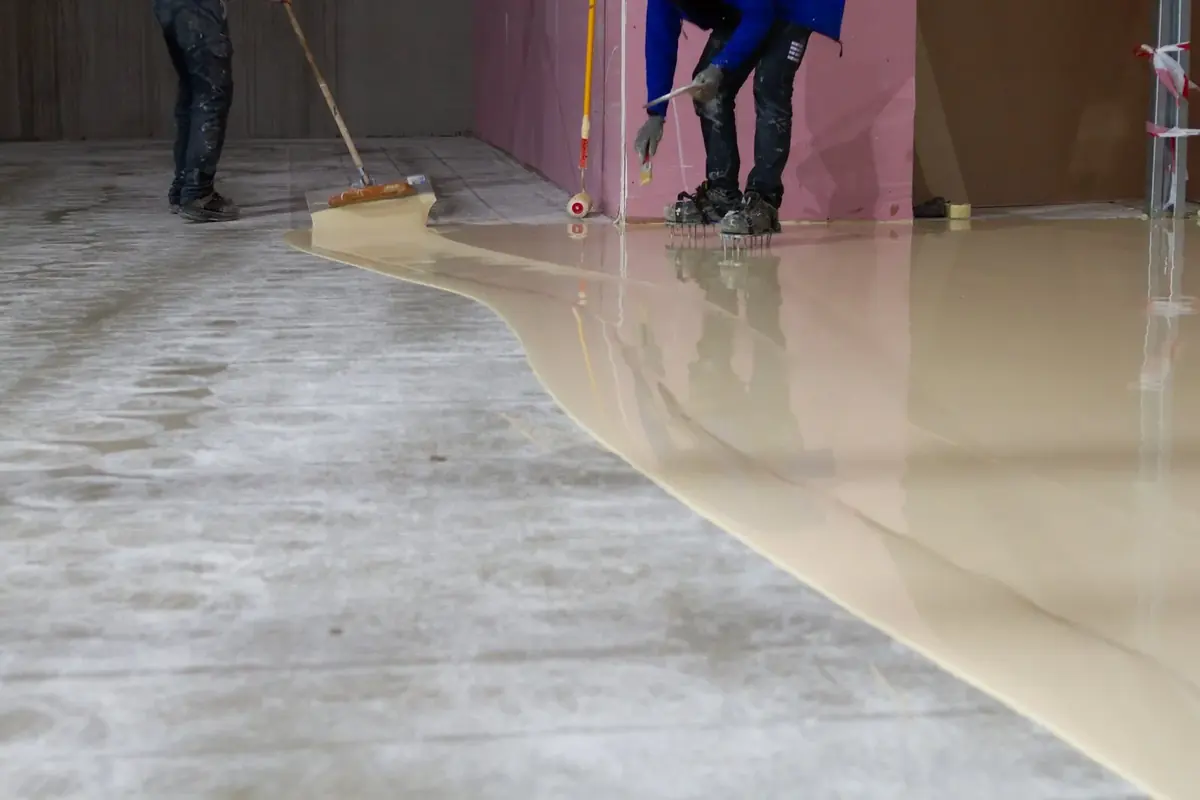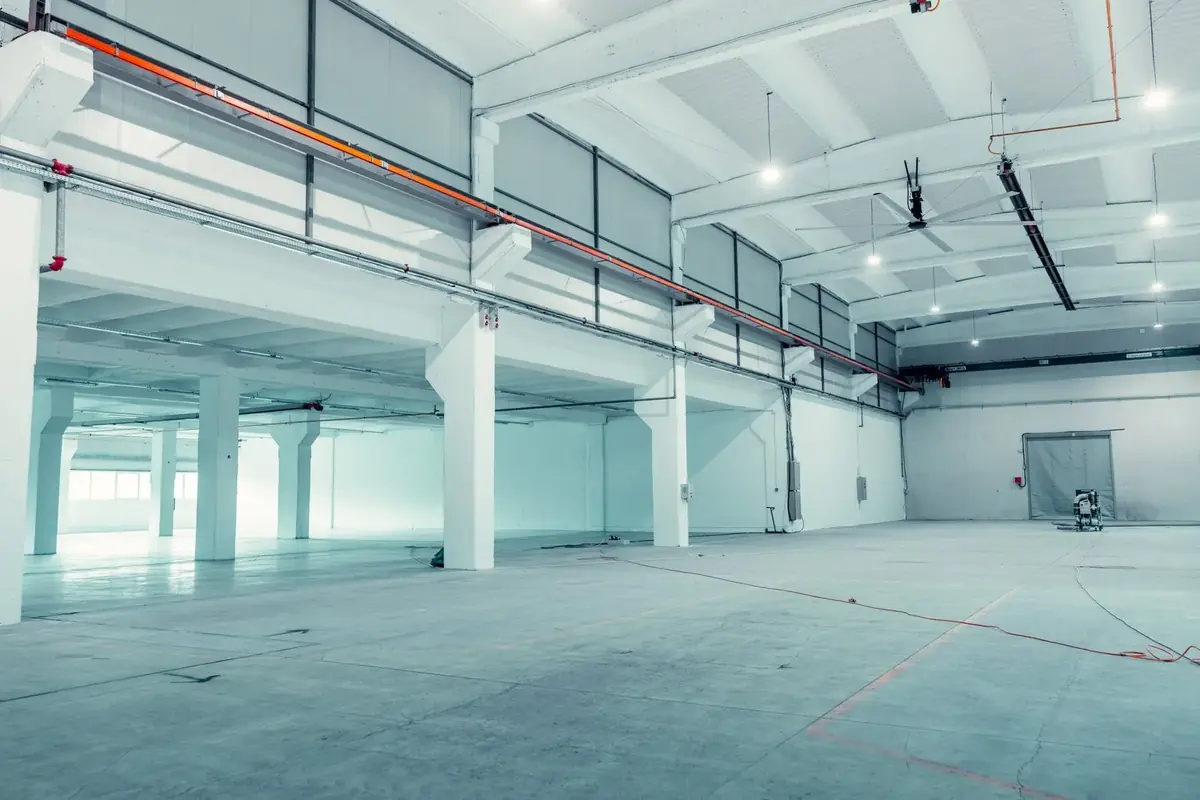
The Phoenix area has a huge inventory of warehouse, distribution and light industrial space, and much of it sits on slabs that were simply sealed at construction or left bare. Over time those floors dust, stain, wear down in the forklift lanes and chip at the joints. A properly specified coating system protects the concrete, makes the facility cleaner and safer, and gives you a surface you can organize with clear markings.
Industrial floor work is less about decoration and more about specification and logistics. This page explains the systems we use, how we handle joints and markings, and how we keep facilities running during installation.
Why coat an industrial floor
- Protect the slab from wheel abrasion, dragged loads and impact.
- End concrete dusting that settles on inventory, racking and equipment.
- Contain spills of hydraulic fluid, oil, coolant and cleaning chemicals.
- Improve light levels with brighter, more reflective surfaces.
- Organize traffic with aisle lines, walkways and zone colors.
- Clean more effectively with auto-scrubbers on a sealed surface.
Industrial system options
| System | Best for | Strengths | Trade-offs |
|---|---|---|---|
| Densifier or sealer | Light traffic, limited budget | Low cost, reduces dusting | No color, limited chemical protection |
| Thin-film epoxy | Light to moderate traffic | Color and cleanability | Wears faster under forklifts |
| High-build epoxy | Moderate to heavy traffic | Thickness and impact resistance | Longer cure; yellows in UV |
| Epoxy + urethane or polyaspartic top | Heavy traffic and chemicals | Abrasion and chemical resistance | Higher cost |
| Aggregate broadcast systems | Ramps, docks, wet or oily zones | Traction | Harder to clean than smooth |
| Urethane cement | Washdown, thermal shock | Toughest in wet and hot use | Specialized install; matte look |
Joints: the hidden problem
The most common damage in industrial buildings is at the control and construction joints. Unfilled joints chip every time a forklift wheel crosses them, and the chips grow into spalls that jolt loads and drivers. Before coating, we clean out damaged joints, rebuild broken edges with industrial repair mortar and fill them with semi-rigid filler designed to support wheels while allowing slight movement.
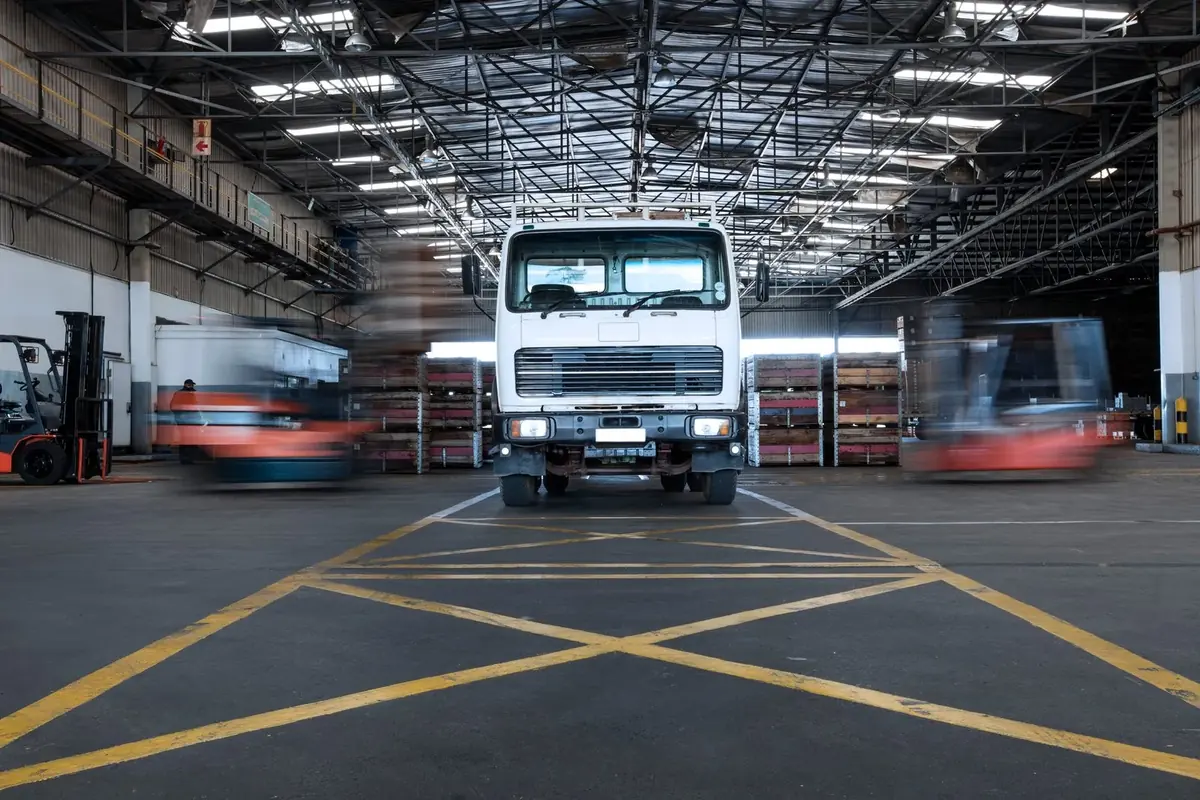
Striping and floor markings
Markings make warehouses safer and more efficient. We install:
- Forklift travel lanes and aisle lines.
- Pedestrian walkways separated from vehicle routes.
- Shipping, receiving and staging zones.
- Hazard markings at docks, columns and equipment.
- Color-coded department or process areas.
Markings can be built into the coating or added to an existing floor. If your facility follows a specific marking standard, we install to your plan.
Planning around operations
Zone-by-zone installation
Most facilities can't shut down. We divide the building into zones, move inventory and equipment out of one zone, prepare and coat it, return it to service and move to the next.
Off-hours work
Nights and weekends are available for facilities that can't spare floor space during operating hours.
Fast-cure topcoats
Quick-curing wear coats let each finished section go back into use sooner.
Our industrial process
- Facility walk. Traffic types, wheel loads, chemicals, cleaning methods and operating schedule.
- Slab evaluation. Condition, joints, cracks, moisture and existing coatings.
- Specification and phasing plan. Written system, zone map and timeline.
- Preparation. Ride-on grinders or shot blasting with dust collection; edges by hand.
- Joint and crack repair. Rebuilt edges and appropriate fillers.
- Coating. Primer, body coats, texture where needed and topcoat.
- Markings. Lines and zones installed.
- Inspection and handover. Each zone is checked before it returns to service.
Why industrial floors need an experienced contractor
Industrial coatings fail for predictable reasons: inadequate preparation, the wrong system for the exposure, or not enough thickness. A failed floor means downtime for repairs and peeling material in traffic lanes. Experience in reading industrial slabs, specifying systems and staging work in active buildings prevents those outcomes.
Phoenix conditions in industrial buildings
Heat
Many warehouses are partially cooled or not cooled at all. Summer interior temperatures can be very high, which affects working time and cure. We often work overnight or early, and choose products for the conditions.
Dock doors
Areas near dock doors see heat, dust and sunlight. UV-stable topcoats and texture help in these zones.
Dust
Fine desert dust enters with every open door. During installation we keep doors closed as much as possible and control dust from preparation with vacuum systems.
New tilt-up slabs
New industrial buildings are common across the Valley. Fresh slabs need moisture testing and sometimes a moisture-mitigating primer.
Battery charging, wash bays and chemical areas
Some zones in an industrial building face harsher exposure than the rest. Forklift battery charging areas can see acid spills. Wash bays stay wet. Maintenance areas handle solvents and fuels. These areas often get a different system or topcoat than general aisles, with chemical resistance selected for the substances involved and texture for wet conditions. We ask for a list of chemicals used on site so the specification matches reality.
What to have ready for the facility walk
- A floor plan or rough sketch showing racking, docks and traffic routes.
- Operating hours and any periods when zones could be cleared.
- Equipment types: forklifts, pallet jacks, scissor lifts, carts.
- A list of chemicals and fluids used or stored on site.
- Cleaning methods and equipment, such as auto-scrubbers or pressure washing.
- Any marking standards or safety requirements your facility follows.
- Known problem areas: spalled joints, cracks, previous coating failures.
Budgeting by zone
Industrial floors don't have to be coated all at once. Many facilities start with the highest-wear areas, such as main forklift lanes, dock aprons and charging rooms, and coat storage zones later. A phased budget lets you address the most urgent problems first while planning the rest of the building.
Maintenance
Regular sweeping and auto-scrubbing with neutral cleaners, prompt spill cleanup and early repair of gouges keep industrial floors performing. Heavy aisles may need topcoat renewal over time.
Choosing colors for an industrial floor
Color in a warehouse is functional. Light gray is the most common choice because it brightens the space, shows spills and dropped items, and provides good contrast for yellow aisle lines. Some facilities color-code zones, for example a different color in a production area or charging room. Very dark colors hide dirt but reduce light levels and make markings harder to see. We help you choose based on lighting, cleaning and safety needs.
Coating around equipment and racking
Coating is easiest in an empty building, but that's rarely the reality. Where racking can't be moved, we coat the aisles and up to the rack bases, and seal edges carefully. Where possible, we move racking in phases to coat underneath. Fixed equipment is protected and coated around. These details are planned during the facility walk so the schedule is realistic.
Dock aprons and transitions
Dock areas take impact from dock plates, heavy forklift traffic and the heat and dust that come in when doors open. Thicker, textured systems often make sense here. Transitions between dock zones and the main floor are planned so wheels roll smoothly from one system to the next without catching an edge.
Fleet and maintenance facilities
Fleet maintenance buildings combine vehicle traffic, lifts, oil, coolant and frequent washing. High-build systems with chemical-resistant topcoats suit service bays, while wash bays get extra texture and attention to drainage. Clear floor markings around lifts and walkways help keep technicians safe.
Food, beverage and clean storage
Some warehouses store packaged food, beverages, medical supplies or electronics. In these buildings, eliminating concrete dust and making floors easy to sanitize are often the main reasons to coat. Light, smooth finishes with chemical-resistant topcoats are easy to scrub and make debris visible. Production areas with wet processes or hot washdowns may need urethane cement instead. If your operation is subject to audits, tell us which cleaning and documentation practices apply so we can align the system and care instructions.
What happens after handover
Once a zone returns to service, we provide written care instructions for the system installed, including cleaning chemicals to use and avoid, scrubber pad recommendations and how to handle spills. Keeping a record of the products installed in each zone makes future repairs and topcoat renewals straightforward.
Mezzanines, stairs and upper levels
Many warehouses include mezzanine offices, storage decks and steel or concrete stairs. Concrete mezzanine decks can be coated to match the main floor, while stair treads can get textured coatings and contrasting nosing lines for visibility. Coating these areas at the same time as the main floor keeps the facility consistent and avoids a second mobilization later.
Warehouse and industrial coatings
Can you coat while we're operating?
Usually yes, by working in zones and scheduling around your shifts.
How long will an industrial coating last?
Service life comes down to build thickness, how well the slab was prepared, what drives on it and how it's cleaned. Expect the busiest forklift lanes to need a fresh wear coat before the rest of the building does.
Will forklifts leave marks?
Some tire marking is normal. Hard topcoats, non-marking tires and regular cleaning keep it under control.
Can you coat under racking?
It's possible but limited. The best results come from coating before racking is installed or moving racks in phases.
Do you offer slip-resistant finishes?
Yes. Grit can be seeded into wash bays, ramps and oily zones at different coarseness levels, and we'll build to whatever safety specification your company already uses.